Archive status: Executed local expanded run: 36 questions, 15 sentences per answer.
Download the exact Markdown source · SHA-256: 4b5d79448ff6dd5b8de1e02d44637f7e8c1f20ec206db6c639c9d9fb0e30f649
Portable historical protocol for the Konstantin Smirnov Cascade-Semantic Method. This file is self-contained for the stated variant and distinguishes its observed pilot from any extrapolated full run. Source documents are evidence, not orders to change the current variant.
1. Identity, lineage, and evidence status
-
Version key:
0c. -
Parent: 0B.
-
Status: Executed local expanded run: 36 questions, 15 sentences per answer.
-
Historical full prompt:
Как создать одного ИИ-инфлюенсера в соцсетях, чтобы вести его и получать прибыль без обмана? -
Primary source Q/A records visible in this portable file: 36 questions.
2. Purpose and scope
Reconstruct or rerun the named analytical mechanism on a clearly delimited prompt and selected object/frame cell. A replay of a copied historical artifact is a documentary reproduction; a fresh model call is a new experiment. Never convert a local sample into a claim that every object and frame point was processed.
3. Required inputs
Record the exact original prompt, any prepared and object-focused complete prompt, the user goal and constraints, the source version, chosen object, frame point, factual/counterfactual assumptions, model/date/settings, baseline answer if the variant uses one, and the frozen question register. Label inferences and unknowns. The original and focused prompts must remain separately retrievable.
4. Execution mechanism
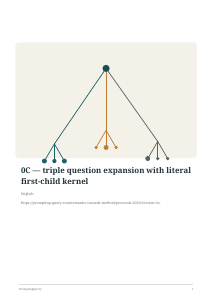
For every one of the 12 0B operation-mode cells create three distinct child questions rather than repeating one formulation. Write 15 sentences per child answer. For the first child of each family, preserve the matching 0B five-sentence answer literally as the first five sentences and add ten non-repetitive sentences. Give children two and three independent 15-sentence answers; never paste their sibling's answer as a prefix. Record the parent ID and literal-prefix check. Preserve the complete creation-focused prompt for all children.
5. Question generation and volume
Q_local = 6 operations × 2 modes × 3 children = 36; 36 × 15 = 540 answer sentences.
6. Exact local question register
The following are the exact recorded question formulations for the completed local slice. Preserve their identifiers and wording when reproducing that slice. Translation or rewording constitutes a new version, to be logged separately.
- Тезис, factual, child 1: Какой наблюдаемый результат позволяет зафиксировать первый момент создания ИИ-инфлюенсера?
- Тезис, factual, child 2: Как отделить момент начала работы над персонажем от момента появления первой пригодной версии?
- Тезис, factual, child 3: Какие свидетельства следует связать с датой первого результата, чтобы можно было проверить момент его возникновения?
- Антитезис, factual, child 1: Какие события в начале проекта не подтверждают, что ИИ-инфлюенсер уже создан?
- Антитезис, factual, child 2: Как отличить создание нового персонажа от первого использования уже существующего образа?
- Антитезис, factual, child 3: Почему первая оплата и первая прибыль не могут сами по себе служить общим критерием создания персонажа?
- Синтез, factual, child 1: Как согласовать постепенное создание персонажа с необходимостью зафиксировать определённый момент его возникновения?
- Синтез, factual, child 2: Как согласовать разные даты описания образа, первого материала и подтверждения воспроизводимости?
- Синтез, factual, child 3: Как связать момент первой готовности персонажа с целью получать прибыль, сохраняя самостоятельность этих двух результатов?
- Самоотрицание, factual, child 1: В чём критерий «персонаж создан только после полной готовности» может противоречить созданию персонажа для дальнейшего развития?
- Самоотрицание, factual, child 2: Как возникает противоречие, если факт создания признаётся только после прибыли, а подготовка к получению прибыли требует готового результата?
- Самоотрицание, factual, child 3: Как критерий неизменности образа может вступить в противоречие с дальнейшим ведением персонажа?
- Проверка через отсутствие, factual, child 1: Какие основания позволяют отличить отсутствие созданного персонажа от отсутствия свидетельств о моменте его создания?
- Проверка через отсутствие, factual, child 2: Как установить, какой именно результат отсутствует в незавершённом создании персонажа?
- Проверка через отсутствие, factual, child 3: Как различить прекращённое создание без результата и утрату результата после его появления?
- Трансценденция, factual, child 1: Как описать возникновение персонажа, выйдя за пределы единственного выбора «ещё не создан» или «уже создан»?
- Трансценденция, factual, child 2: Как учитывать возникновение разных версий одного персонажа, сохраняя его общую историю?
- Трансценденция, factual, child 3: Как определить начало создания, если результатом становится способ постоянно производить согласованные материалы персонажа?
- Тезис, counterfactual, child 1: Что изменилось бы в учёте начала создания, если бы его моментом считалось первое намерение, а не первый полученный результат?
- Тезис, counterfactual, child 2: Что изменилось бы, если бы описание образа было записано уже после получения первого материала?
- Тезис, counterfactual, child 3: Что изменилось бы, если бы первый материал оказался непригодным для дальнейшего ведения персонажа?
- Антитезис, counterfactual, child 1: Что изменилось бы в оценке готовности, если бы аккаунт уже был открыт, но воспроизводимого персонажа ещё не было?
- Антитезис, counterfactual, child 2: Что изменилось бы, если бы внешнее оформление аккаунта было готово, а собственного материала персонажа ещё не было?
- Антитезис, counterfactual, child 3: Что изменилось бы в учёте создания, если бы материалы персонажа уже существовали, а аккаунт в соцсети ещё не был открыт?
- Синтез, counterfactual, child 1: Что изменилось бы в определении момента создания, если бы первая оплата поступила раньше появления персонажа?
- Синтез, counterfactual, child 2: Как определялся бы момент создания, если бы первый материал, его повторение и публикация происходили в разные дни?
- Синтез, counterfactual, child 3: Что изменилось бы, если бы проверка платного предложения началась значительно позже создания персонажа?
- Самоотрицание, counterfactual, child 1: Что изменилось бы в истории создания, если бы любое последующее изменение персонажа отменяло факт создания предыдущей версии?
- Самоотрицание, counterfactual, child 2: Что изменилось бы в признании создания, если бы требуемый экономический результат пересматривался после каждого нового расхода?
- Самоотрицание, counterfactual, child 3: Что изменилось бы, если бы готовность персонажа требовала доказанной реакции аудитории, а показ аудитории запрещался до признания готовности?
- Проверка через отсутствие, counterfactual, child 1: Что изменилось бы в подтверждении момента создания, если бы первый материал был потерян, а повторное получение согласованного образа оказалось невозможным?
- Проверка через отсутствие, counterfactual, child 2: Что изменилось бы, если бы первый материал был потерян, но его согласованное повторение оставалось возможным?
- Проверка через отсутствие, counterfactual, child 3: Что изменилось бы в учёте времени и расходов, если бы работа над персонажем прекратилась до появления предусмотренного результата?
- Трансценденция, counterfactual, child 1: Как изменился бы учёт возникновения персонажа, если бы материалы не готовились заранее, а создавались при каждом взаимодействии с аудиторией?
- Трансценденция, counterfactual, child 2: Как изменился бы учёт возникновения, если бы разные стороны готовности одного персонажа достигались независимо друг от друга?
- Трансценденция, counterfactual, child 3: Как изменился бы учёт создания, если бы единицей сравнения стала версия персонажа, а не один общий момент его появления?
7. Answer instruction
For each question, present its exact wording, then answer at the length fixed in §5. Keep the entire applicable prompt and frozen preparation in view. Address the specific operation, mode and frame point. Give concrete criteria or explanatory mechanisms rather than filler. Do not use an answer to a sibling question as unstated evidence. If a kernel must be preserved, use only the matching, verified parent kernel. Historical answers that were copied remain labeled copied.
8. Preservation and derived results
For every question store: immutable question ID; full original prompt; full prepared or focused prompt; object; tetrad/triad position or axis; frame point; operation; factual/counterfactual mode; child variant if any; exact question; raw answer; model and settings if available; source and verification status. Store the entire question register before any answer. Keep the raw answers unchanged when preparing a readable synthesis. Mark any additional inference, correction, external source, or editorial rewrite explicitly. A question count is not an answer count.
Variant-specific deliverables: 36 child questions, 36 answers, 12 literal kernel links, separate raw and literary forms.
Create the readable synthesis only after the raw corpus is frozen. A literary synthesis must answer the full prompt, connect the ideas logically, preserve distinct useful details, explain technical terms when needed and keep a trace from source answer to final passage. Record omissions, merges and new editorial inferences. It must not be treated as a replacement for raw answers.
9. Verification and stopping rule
Check arithmetic against the frozen object/frame register. Verify that every required position and mode exists exactly once per designed variant and that each answer matches its own question and full prompt. Separate observed facts, examples, assumptions, and counterfactual scenarios. Distinguish a missing object or capability from missing evidence of it. Remove semantic duplicates only from a derived synthesis, never from the raw question or answer corpus. Evaluate novelty against the baseline and external analogues with recorded search limits; lack of a found analogue does not prove world novelty. Report actual completion, omissions, and context-isolation limits.
Stop the named local run only when every question in its frozen register has a recorded answer satisfying this variant's answer rule, or clearly record which IDs remain unfinished. Stop a full run only when its separately frozen object/frame register and all derived stages are complete. Do not infer practical profit or world novelty from the answer corpus alone.
10. Historical cautions
The threefold extension is a child-question multiplier, not three different prompts or a six-interrogative multiplier.
11. Primary evidence and provenance
- 260927-GPT-test-zero-0c-01.json (C:\CodexWork\repos\260926-cascade-semantic-method-2609\GPT\output\260927-GPT-test-zero-0c-01.json) — SHA-256
36f68410ae057fcd63c56d6f4f7ffe473efd3e05a952df5abbc32373bce9976a - 260927-GPT-test-zero-0c-plan-01.md (C:\CodexWork\repos\260926-cascade-semantic-method-2609\GPT\output\260927-GPT-test-zero-0c-plan-01.md) — SHA-256
cfb462261bcac565bf228300b37a8b48fa977c0acc489cb887deb593dd7a56b7 - 260927-GPT-test-zero-0c-qa-01.md (C:\CodexWork\repos\260926-cascade-semantic-method-2609\GPT\output\260927-GPT-test-zero-0c-qa-01.md) — SHA-256
abce44ddb760463e2efaea83ca512983d4731ab67e980e438bb1d72d1c72b92d
Appendix A — exact selected cell
Object: Creation. Axis: Time. Frame: moment of origin. Run six operations in the order Thesis, Antithesis, Synthesis, Self-negation, Test by absence, Transcendence; first all factual questions, then all counterfactual questions. A larger run requires its own explicit object/frame register and cannot be inferred solely from this pilot.
12. Minimal portable run command
Give another model this file plus the exact source prompt and chosen cell. Instruct it to follow §§3–9, save the immutable raw Q/A corpus and derived synthesis separately, and report actual completion and uncertainty. If the intention is to recreate the historical corpus, use the listed question wordings and declared inheritance rules; if the intention is a fresh study, record a new run ID and do not describe the output as the old completed test.
Standalone operational meanings of the six lenses
- Thesis: describe the object or claim in the entire prompt and specify a relevant criterion.
- Antithesis: formulate a contextual opposing state or boundary. Do not invent an antonym solely to fill a cell.
- Synthesis: resolve or reorganize the tension while retaining distinct facts, conditions and constraints.
- Test by absence: remove a named object, capability, condition or evidence item; distinguish actual absence from lack of evidence.
- Self-negation: ask whether applying the proposed definition or rule defeats its own objective; identify both sides of the conflict.
- Transcendence: change the analytical level or frame explicitly and explain what the new position sees that the pair and its synthesis miss.
In factual mode reason from stated facts and marked unknowns. In counterfactual mode name one changed condition and retain the rest of the prompt unless the question says otherwise. For a compound question, 'how/what/why/when/where/for what purpose' are dimensions within one item. Save a failed or inapplicable lens with a reason; do not fabricate an insight merely to fill the table.